Skip to main content
Skip to footer
Highlights
Screw cap micro tubes
Reaction tubes
Cryopreservation
Reagent and centrifuge tubes
Cups
Plates
Storage boxes and racks
Piston pipette
Pipette tips
Pipetting aids
Serological pipettes
Transfer pipettes / Pasteur pipettes
Cell culture flasks
Cell culture plates
Cell culture dishes
3D cell culture
lumox® optical foil base
x-well microscope slide
miniPERM® bioreactor
Cryopreservation
Cell culture inserts
Cell culture tubes
Cell scrapers
Cell strainers
Filtration
Swabs
Petri dishes
Petri dish racks
Inoculation tools
PCR plates
PCR strips
PCR single tubes
Closure options
PCR racks
Forensic swabs
Deep well plates
Filtration
Cuvettes
Disposal bags
Stirring spatulas
Weighing scales
Adhesive labels
Pens
S-Monovette® blood collection tube
S-Monovette® Needles
Adapters
Tourniquets
S-Monovette® Accessories
Prepared micro sample tubes
Prepared sample tubes
Micro needles
Carrier tubes
Analysis and sample tubes
Secondary tubes
Caps
Block racks
Centrifuges and accessories
Venous blood sedimentation
Lancets
Microvette®
Multivette® 600
Minivette® POCT
Accessories for capillary blood collection
Capillary blood sedimentation
Carrier tubes
Urine Monovette®
Urine cups
Urine collection containers
UriSets
Urine tubes
Faeces tubes
Arterial venous blood gas analysis
Capillary blood gas analysis
Salivette®
CSF tubes / S-Monovette®
Formalin system/Biopsy
Multi-Safe disposal boxes
Accessories for disposal boxes
Block racks
Multi purpose cups
Secondary tubes
Caps
Warming blood products
Tube segment opener
Urine measuring systems
Urine drainage systems
General clinical needs
Tempus1800®
External shipping
Transport cases
Internal mailing
Shipping with special requirements
Clinical laboratory
Microbiology
Tempus1800®
Life Science
Sample Handling
Liquid Handling
Cell Culture
Microbiology
Molecular Biology
Purity Levels
Pre-analytical workflow
Sample collection
Venous blood collection
Capillary blood collection
Urine
Sample transport
Tempus1800®
Sample transport case
Mailing Systems
Laboratory automation
Medical laboratory equipment
Sample Storage Systems
Secondary tubes
Closures for medical laboratory samples
Multi-Safe disposal boxes
Sample transport
Tempus1800®
Sample transport case
Mailing Systems
Laboratory Automation
Animal Healthcare
OEM
Service & Support
Centrifugation recommendations for S-Monovettes
Conversion of RCF into rotational speed
Pipette tips compatibility overview
PCR plates compatibility overview
Batch certificates
Trade Shows & Congresses
FAQ
Download
Catalogue
Brochures
User information
Instruction for Use
Instruction manuals
Studies
Safety Data Sheets
Declarations of conformity
Videos
Material Properties
Chemical Resistance
Freezing SARSTEDT Tubes
Quality Management
Purity Levels
E-Learning
About us
History
Purchasing and Logistics
Sustainability
Compliance
Sales organisations
Career
Contact
Home
Service
Download
E-Learning
The Company
Career
Contact
Search Field.
Search Button
Products
Applications
Search Field.
Search Button
Home
///
Life Science
///
Cell culture
///
3D cell culture
///
BIOFLOAT™ cell culture plate, spheroid culture
Home
///
Life Science
///
Cell culture
///
3D cell culture
///
BIOFLOAT™ cell culture plate, spheroid culture
Share
BIOFLOAT™ cell culture plate, spheroid culture
Variants (3)
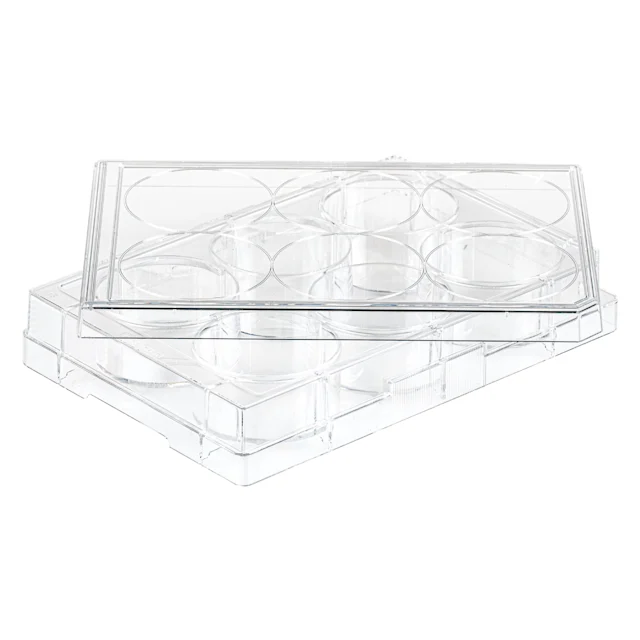
Cell culture plate, 6 well, surface: BIOFLOAT™, flat base
83.3920.400 | Cell culture plate, 6 well, material: PS, surface: BIOFLOAT™, for spheroid culture, flat base, sterile, non-pyrogenic/endotoxin-free, non-cytotoxic, 1 piece(s)/bag
Compare
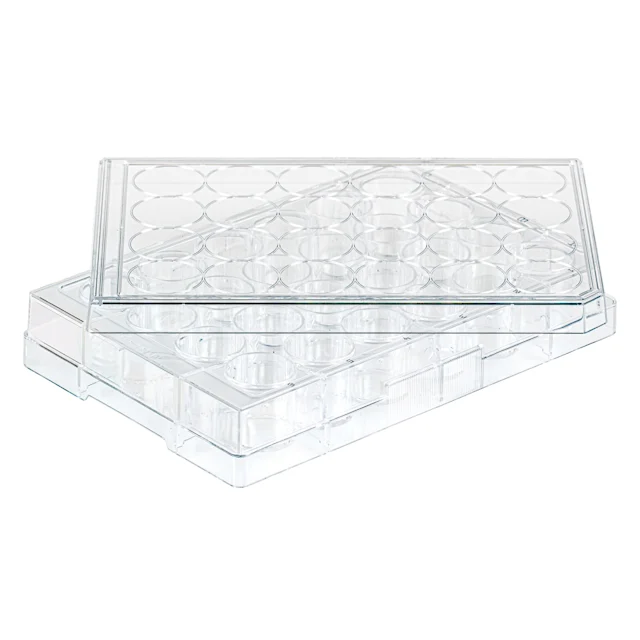
Cell culture plate, 24 well, surface: BIOFLOAT™, flat base
83.3922.400 | Cell culture plate, 24 well, material: PS, surface: BIOFLOAT™, for spheroid culture, flat base, sterile, non-pyrogenic/endotoxin-free, non-cytotoxic, 1 piece(s)/bag
Compare
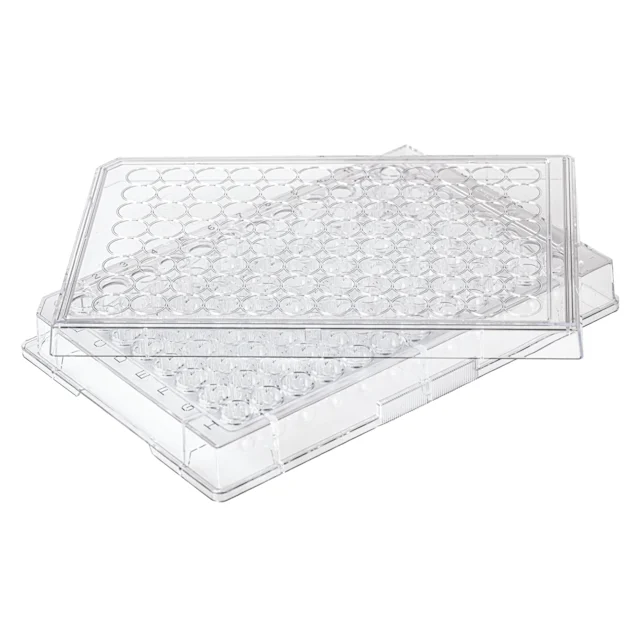
Cell culture plate, 96 well, surface: BIOFLOAT™, round base
83.3925.400 | Cell culture plate, 96 well, material: PS, surface: BIOFLOAT™, for spheroid culture, round base, sterile, non-pyrogenic/endotoxin-free, non-cytotoxic, 1 piece(s)/bag
Compare
Life Science // Cell culture
Cell culture flasks, plates and dishes
What does the red-yellow-green colour code with which the cell culture products are labelled mean?
Which caps are available with the cell culture flasks?
When should each type of cap be used for cell culture flasks?
Can the SARSTEDT cell culture flasks, plates and dishes be coated with, for example, poly-L-lysine?
What sizes of cell culture vessels does SARSTEDT offer?
What is the difference between primary and secondary cells?
What is the difference between suspension cells and adherent cells?
Which cell types are best suited for the respective growth surfaces?
How long do the growth surfaces remain stable under different cultivation conditions?
Are there special handling instructions for the culture of particularly sensitive cells?
Why do my cells grow in patterns (ring or wave-like) ?
BIOFLOAT™ cell culture plate, spheroid culture
What is the difference between primary and secondary cells?
What is the difference between suspension cells and adherent cells?
Can the medium in the plate be changed without using a new plate?
Are the BIOFLOAT™ plates suitable for cultivating organoids?
How long can cells be cultivated in the plate?
Why do some cells form only loose spheroids?
How quickly do spheroids form in the plates?
Do the plates need to be centrifuged after seeding the cells?
What cell count should be seeded per well?
Where do you find the plate dimensions that are needed for use in an analysis device?
Is there a protocol for spheroid culture in the BIOFLOAT™ plate?
Can fluorescence images be taken in the BIOFLOAT™ plate?
Which cell types are best suited for the respective growth surfaces?
How long do the growth surfaces remain stable under different cultivation conditions?